Answer Snapshot
Individually wrapped frozen banana pops can make grab-and-go sales easier because the guest chooses one portion and staff can hand it over without scooping or plating. The format works best when the product is easy to identify, the payment step is simple, and the serving model matches the venue. Test the path from freezer to checkout before adding it to a busy service line.
Key Takeaways
- The wrapper must make the treat clear even when guests cannot see the food inside.
- Check whether guests can identify the product and whether its unit barcode works at your register.
- Decide whether staff hand it over or guests select it themselves.
- Test a real purchase during a normal service period, from selection to payment and handoff.
- A package with several portions suits take-home shopping; it does not serve the same purpose as a single wrapped unit.
A long queue is a poor place for a guest to learn what a frozen product is. They need to see the item, understand the price, and pay. Staff need a product they can find and hand over without preparing it. This guide looks at the service format itself: how the package fits the guest’s path, the register, and the staff routine. A broader foodservice buyer guide covers supplier comparisons and product-selection questions.
Why does individual wrapping matter in grab-and-go?
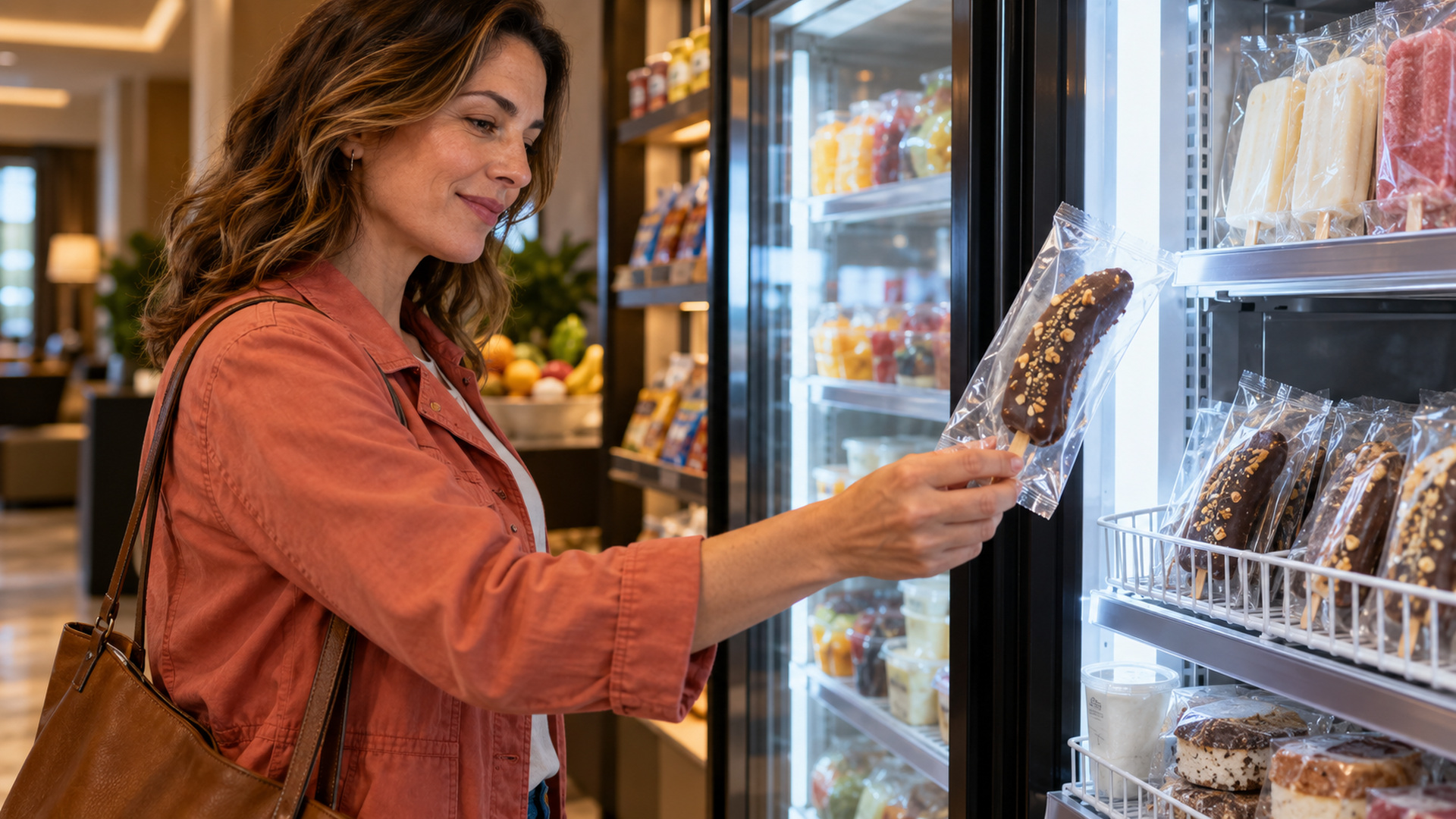
Individually wrapped frozen banana pops move from freezer to checkout without scooping, cutting, plating, or portioning. The pack gives the guest something to hold while walking and gives staff a unit to count. It can also display a barcode and the product details a customer may want to read. Those benefits depend on the actual wrapper: a package that hides the food, sticks to a cold display, or is hard to scan creates work rather than saving it.
The wrapper does not replace storage and receiving procedures. Follow the product and venue instructions; our storage and receiving guide covers that work in detail. Keep the current package information available so staff can point to the exact product label when a guest asks a question.
Match the format to the guest and the service model
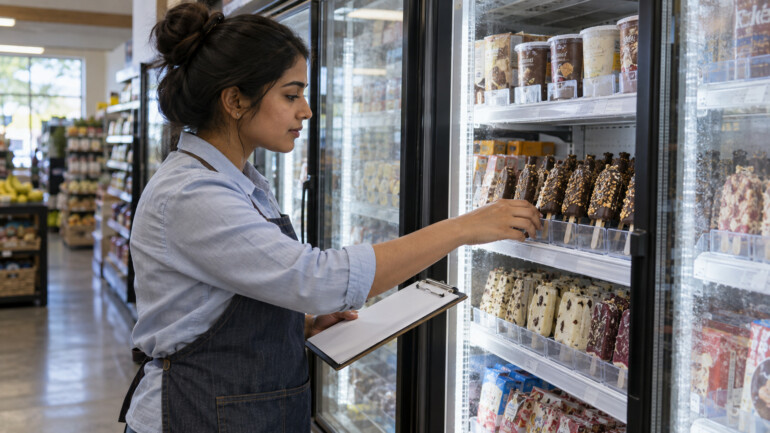
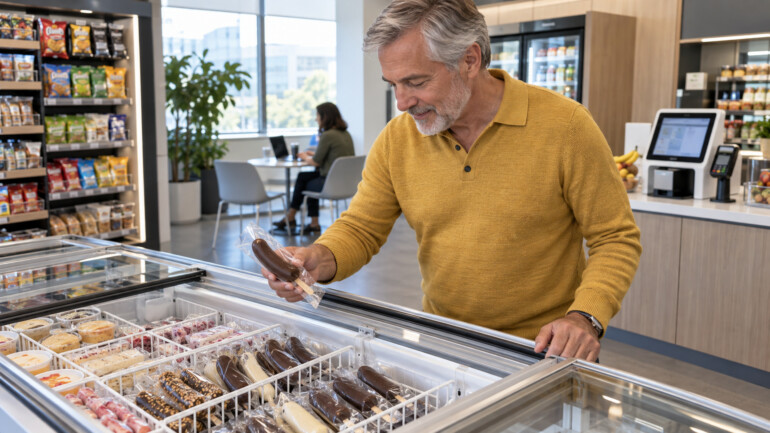
Start with where the guest will eat. At a zoo kiosk, the item may be handed over to someone already walking. At a hotel market, the guest may browse without staff help. At an arena, a sale may happen in a short rush between events. The same package must work in all three settings, but the weak point may differ: serving speed, label clarity, or freezer visibility.
| Service setting | First thing to test | Possible friction |
| Staffed concession | Time from selection to handoff | Wrapper hard to identify or remove from a packed freezer |
| Unattended hotel market | Self-service selection and barcode scan | Guest cannot tell what the product contains |
| Convenience store | Freezer-door view and checkout | Product name or price is difficult to see |
| Small event cart | Freezer access and restocking | Backup cases are too far from the selling point |
Use a sample from the exact flavor and pack, not a photo. Ask one person unfamiliar with the product to pick it up and explain what it is. If the description is wrong or uncertain, revise the sign or product placement before adding more flavors.
Test the wrapped service format
At the register. Confirm that the barcode on each sellable unit scans correctly and that the register shows the flavor a cashier expects. Totally Bananas lists its foodservice products as individually wrapped, with 24 units of one flavor per case. Verify current product details and availability before you build item records.
At the freezer. Ask a first-time guest to point to the item they want without opening the door. If they cannot identify the product or flavor, improve the product photo or label view. Keep the displayed price beside the item, not only on a menu far from the freezer.
At the handoff. Ask staff to retrieve the correct flavor while another order is being processed. Can they find it without searching through several boxes? Can they hand it over without opening the wrapper or preparing the food? These are simple ways to see whether the format supports quick service in your venue.
For self-service. Run the purchase without staff explaining the product. Check that the item name and price match at the freezer and checkout. Keep current product information available for ingredient and allergen questions; direct guests to the package for the exact item rather than relying on a general claim.
Give guests a clear choice
Place the item where the guest naturally chooses and pays, while keeping a clear path for staff. Use a plain product name, one price, and an image of the exact item. Check every ingredient or dietary message against the current package. A wrapped product does not need a long sales pitch, but it does need to be recognizable in the time a guest has to choose.
Opening-day service check
1. Put the item name and price where a guest can read them before reaching the register.
2. Add the correct product name, flavor, and unit barcode to the point-of-sale system.
3. Run a test purchase from both the guest-facing and staff-facing sides of the counter.
4. Ask a staff member to locate the right flavor and hand it over during normal service.
5. Keep the current package available for guest questions about ingredients or allergens.
6. Make sure the next unit is easy to retrieve without interrupting another order.
7. Record questions or checkout errors during the first service period and fix those steps.
During the first service period, note how often the cashier needs help identifying the item, how often a scan fails, and whether retrieval delays another order. These observations show whether the format fits the workflow; they do not predict sales at another venue. Follow the supplier and venue storage instructions; the storage and receiving article linked above covers that work in detail.
When does a pack with several portions make sense?
Choose by shopping mission. A grocery customer may want a box to take home and share over several days. A guest at a concession usually wants one ready-to-eat item now. A pack with several portions can be a better choice for a retail freezer built around take-home shopping, but it often requires a different price point, shelf space, and checkout message. Compare the exact pack before deciding which to stock.
Frequently Asked Questions
How do individually wrapped frozen banana pops work for grab-and-go?
They give a guest one ready-to-carry portion and let staff hand it over without scooping or plating. Confirm that the exact unit has a readable barcode and wrapper before adding it to the register.
Does individual wrapping suit every venue?
No. A packaged single serving can simplify a walk-up sale, but a venue built around plated desserts or scooped service may prefer another format. Test the handoff and register flow before adding it to the menu.
How many flavors should a small venue start with?
There is no universal number. Start with the few choices that fit the freezer and are easy to explain. Add flavors only after you can see actual sales and manage labeling questions.
Can the same pack work in grocery and foodservice?
Sometimes formats differ. Check whether the item is a pack with several portions or a single wrapped item; confirm pricing, barcodes, and case details for that specific product.
Explore a single-serve option
Totally Bananas offers individually wrapped, chocolate-dipped frozen banana novelties for foodservice venues. Review current product details and contact the sales team for samples and ordering options for your location.