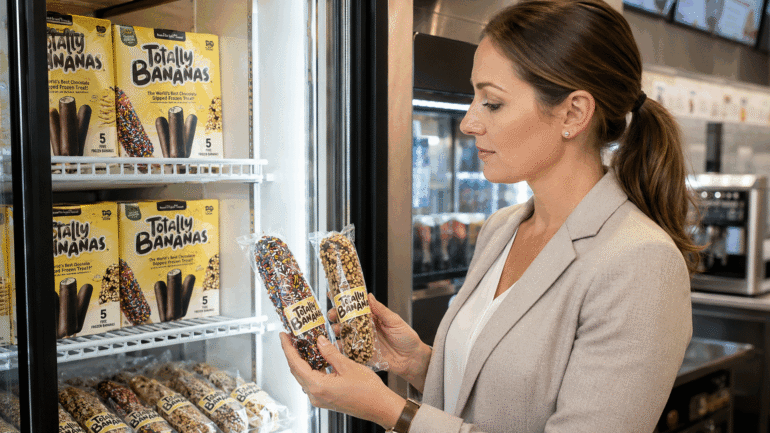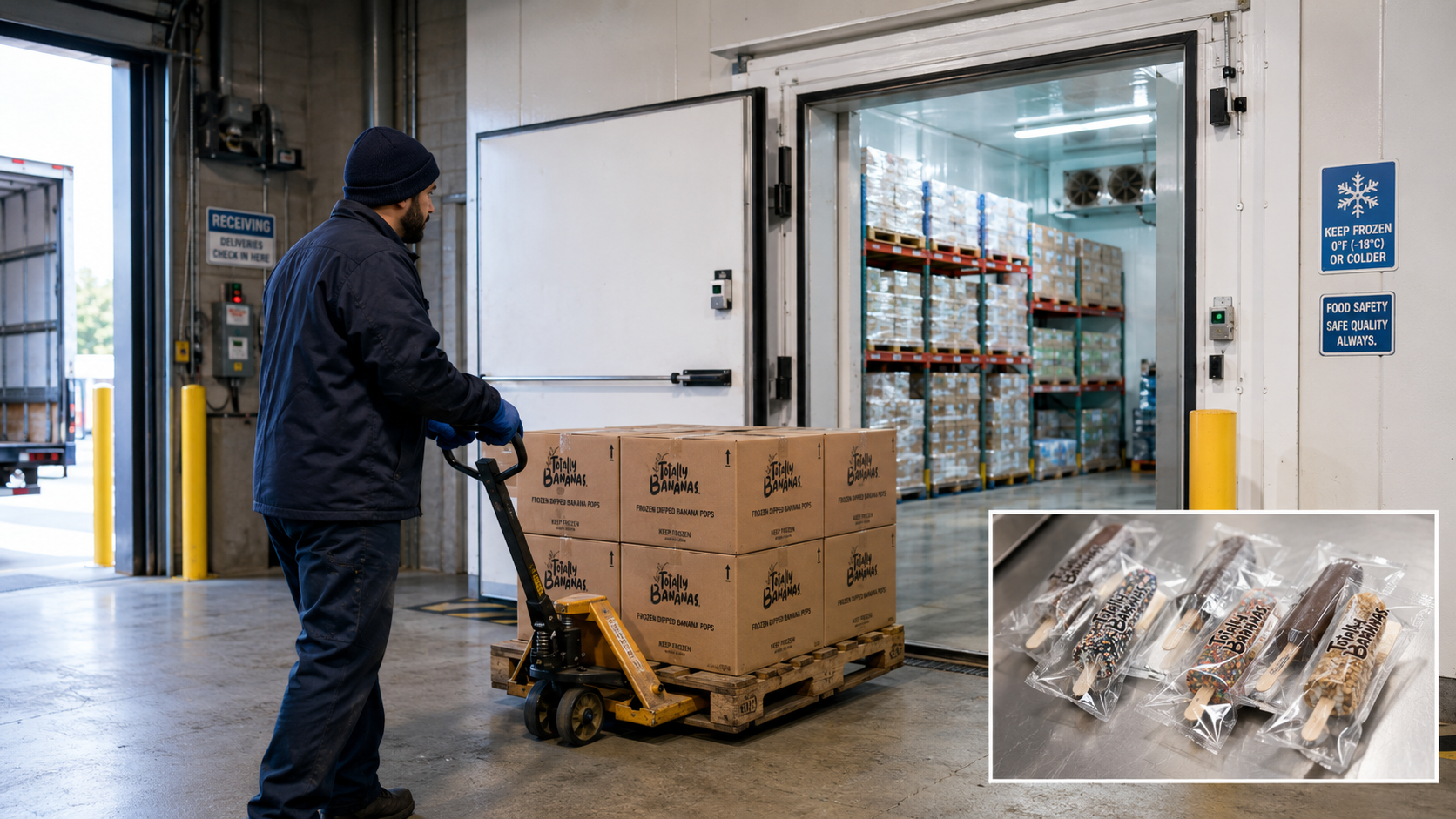
Answer Snapshot
Frozen banana pops should remain frozen through receiving, storage and display. Foodservice teams should inspect deliveries for thawing or package damage, follow the product label and supplier instructions, maintain reliable freezer temperatures, rotate stock by date and avoid selling items that show evidence of temperature abuse.
Why frozen-product handling affects more than food safety
A frozen novelty can remain safe yet deliver a poor guest experience if the chocolate blooms, the package is crushed, the product partially thaws or the wrapper is covered with heavy frost. Handling therefore protects four things at once: safety, texture, appearance and saleability.
Totally Bananas states that its foodservice products are blast frozen, individually wrapped and offered with a one-year shelf life under proper conditions. The product-specific label and current supplier instructions should always take priority over a general article.
Receiving checklist for frozen banana novelties
| Check | What to look for | Action if there is a problem |
| Delivery condition | Product arrives fully frozen, not soft or partially thawed. | Separate affected cases and follow supplier and food-safety procedures. |
| Case integrity | No crushed corners, water stains, open seams or punctures. | Photograph and document damage before acceptance or transfer. |
| Package integrity | Individual wrappers are sealed and readable. | Do not sell torn, open or illegible packages. |
| Date and lot information | Codes are present and match receiving records. | Record discrepancies and contact the supplier. |
| Quantity and flavor | Case count and SKU match the purchase order. | Correct the receiving record before stocking. |
| Transfer time | Cases move promptly from the receiving area to frozen storage. | Avoid leaving frozen product at ambient temperature while other tasks are completed. |
What freezer temperature should operators use?
USDA guidance recommends a freezer set at 0°F (-18°C) or below for long-term frozen-food storage. FDA retail-food guidance provides a model for safe food handling, while local and state requirements govern individual establishments.
Operators should use a calibrated thermometer, follow local code and use the current Totally Bananas product documentation. Do not publish a product-specific temperature range unless the supplier has approved it.
Separate reserve stock from selling stock
A practical operation separates reserve inventory from the customer-facing display. Reserve cases stay protected in a reliable storage freezer. The display freezer holds enough individually wrapped units to support sales without overcrowding.
| Area | Purpose | Best practice |
| Reserve freezer | Protect unopened cases and backup inventory | Keep cases off the floor, organized by SKU and easy to rotate. |
| Display freezer | Make product visible and accessible | Maintain clear facings, readable packages and adequate airflow. |
| Receiving area | Short-term verification only | Minimize dwell time and transfer product promptly. |
| Damaged-product hold | Prevent questionable items from reaching sale | Label, isolate and document until an authorized disposition decision. |
Do not overcrowd the freezer
Overcrowding can hide products, crush wrappers and interfere with air circulation depending on the equipment. Follow the freezer manufacturer’s load lines and airflow instructions. Keep the display organized so guests can see the package and staff can rotate stock.
⦁ Keep ventilation openings clear.
⦁ Do not stack above the equipment’s approved load line.
⦁ Avoid placing heavy cases on individual novelties.
⦁ Remove ice buildup or frost that blocks product visibility, following equipment procedures.
⦁ Close doors or lids promptly and check gaskets during routine maintenance.
How to rotate inventory
Use first-expiring, first-out rotation rather than assuming the newest delivery should sell first. Record date or lot information at receiving, place newer cases behind older saleable stock and inspect inventory during each replenishment.
- Label the case location: Use the received date and any best-by or lot information without covering required details.
- Rotate reserve stock: Move older eligible cases forward before adding a new delivery.
- Rotate display units: Refill from the back or bottom so older packages sell first.
- Check package condition: Remove damaged, open or heavily frosted wrappers from sale.
- Document exceptions: Record thawing, freezer failure, customer returns or supplier concerns.
What a one-year shelf-life statement does and does not mean
Totally Bananas currently lists a one-year shelf life on its foodservice product page. Shelf life assumes the product is stored and handled as intended. It does not mean a partially thawed, damaged or temperature-abused item remains acceptable until the printed date.
Operators should confirm the dating format, storage instructions and disposition rules with the current package and supplier. A date supports inventory control; it does not replace condition checks.
Signs of possible temperature abuse or damage
⦁ The product or package feels soft when it should be fully frozen.
⦁ Water stains, leakage marks or collapsed packaging suggest thawing and refreezing.
⦁ Excessive ice crystals or frost appear inside a package.
⦁ Chocolate coating or product shape is visibly damaged after opening an approved quality sample.
⦁ Wrapper seals are open, torn or no longer readable.
⦁ A freezer alarm, power loss or temperature record indicates an unresolved excursion.
Operational rule:
Do not guess whether temperature-abused product is safe or saleable. Isolate it and follow supplier instructions, local food-safety requirements and company procedures.
Handling during display and replenishment
Replenishment should be fast and organized. Bring only the quantity needed for the display, close reserve storage promptly and avoid leaving cases beside the freezer while staff complete unrelated tasks.
⦁ Follow the establishment’s hand-hygiene and package-handling policy.
⦁ Do not place damaged packages back into the display.
⦁ Keep flavor facings consistent so staff can notice low stock quickly.
⦁ Check that price and ingredient-reference materials remain current.
⦁ Record repeated freezer problems rather than treating each event as isolated.
Emergency plan for a freezer failure
- Keep the unit closed: Opening the door or lid can accelerate temperature change.
- Notify the responsible manager: Record the time, equipment, affected inventory and available temperature information.
- Move product only under the approved plan: Use verified backup frozen storage when available.
- Segregate questionable inventory: Do not sell it until an authorized decision is made.
- Contact the supplier or local authority when needed: Product-specific and jurisdiction-specific guidance should control.
- Document the final disposition: Keep records for loss review, supplier communication and prevention.
Weekly frozen-novelty control checklist
| Control | Owner | Evidence |
| Freezer temperature check | Opening and closing manager | Temperature log or equipment record |
| Package and facing inspection | Shift lead | Damaged units removed and display restored |
| Inventory rotation | Stocking team | Older eligible units placed first |
| Price and signage review | Merchandising lead | Current price and approved claims visible |
| Spec-sheet availability | Manager | Current ingredient/allergen reference accessible |
| Equipment condition | Facilities or manager | Gaskets, alarms, frost and load line checked |
Final recommendation
The best frozen-product handling system is simple enough to repeat every shift. Inspect the delivery, move it promptly into reliable frozen storage, separate reserve and display inventory, rotate by date, protect package visibility and isolate anything that may have thawed or been damaged.
Contact Totally Bananas for the latest foodservice product information sheet, case specifications and product-specific handling guidance before onboarding the product or updating operating procedures.
Frequently asked questions
How long do Totally Bananas foodservice products last?
The current foodservice page states a one-year shelf life. Shelf life depends on proper storage and handling, so buyers should confirm the current package and supplier documentation.
At what temperature should frozen banana pops be stored?
USDA guidance recommends 0°F (-18°C) or below for long-term frozen-food storage. Operators should follow local requirements, equipment guidance and the product-specific label or supplier instructions.
Can frozen banana pops be refrozen after thawing?
Do not make a blanket decision from an article. Isolate temperature-abused product and follow supplier, local food-safety and company procedures.
How many units are in a Totally Bananas foodservice case?
The current ingredient/spec page lists 24 same-flavor individually wrapped units per case.
What should staff do if a freezer fails?
Keep the unit closed, notify the manager, record available temperature and timing information, move product only under an approved plan, isolate questionable inventory and obtain an authorized disposition decision.