Answer Snapshot:
Choose a frozen banana supplier by scoring the exact product, current food-safety and label documents, case and package fit, order reliability, issue response, and sales support. Start with non-negotiable venue needs, test samples under real operating conditions, and require proof for certifications or claims instead of accepting broad statements.
Key Takeaways
- Write non-negotiable venue, guest, storage, package, and document needs before meeting suppliers.
- Score the exact SKU and case configuration that will be ordered, not a general brand promise.
- Request current ingredient, allergen, nutrition, facility, certification, case, storage, shelf-life, insurance, and food-safety documents as relevant to your organization.
- Test samples after normal freezer storage and include receiving, service, scanning, wrapper, and staff checks.
- Review communication, the ability to identify product by its lot code, complaint handling, backup contacts, and the supplier’s fix when something goes wrong, along with price and lead time.
A supplier decision affects more than taste. The product must arrive in the right condition, fit the freezer and service model, carry usable labels, meet the buyer organization’s documentation needs, and remain easy to reorder. A supplier also needs a clear process when a shipment is late, damaged, incorrect, or involved in a recall.
The most useful selection process separates three areas: product fit, documented proof, and operating support. A scorecard keeps the team from choosing on flavor, price, or a sales presentation alone.
Score Suppliers Across Product, Proof, and Support
Product answers whether guests and operations will accept the item. Proof answers whether the buyer can verify important facts. Support answers whether the supplier can help the program run after approval. A strong result in only one area is not enough.
For example, a good-tasting product may still fail if the case does not fit the freezer, the label documents are incomplete, or the supplier cannot explain the response process for a damaged shipment. A well-documented product may still be wrong for the guest or price point.
Start with Venue and Shopper Requirements
Create a one-page requirement list and separate each item into must-have, preferred, and optional. This prevents a late preference from being treated like a critical need.
| Requirement area | Questions for the buyer team | Example evidence |
| Guest and menu | Who buys here? What menu role, portion, flavors, and price range fit? | Guest profile and current assortment |
| Service model | Grab-and-go, staffed counter, event rush, self-checkout, or mobile cart? | Service observation and POS needs |
| Freezer | Usable capacity, display location, back stock, temperature monitoring, and access? | Measurements and equipment procedures |
| Packaging | Individual wrap, UPC, label visibility, opening, disposal, and case markings? | Physical package and scanning test |
| Dietary information | Which ingredients, allergens, claims, and certifications must be reviewed? | Current package and policy checklist |
| Purchasing | Delivery address, order method, MOQ, lead time, freight, payment, and insurance needs? | Vendor setup and receiving rules |
| Risk and support | Lot-code identification, recall notice, complaint response, backup contacts, and sales aids? | Written procedures and contact list |
Frozen Banana Supplier Scorecard
Score each area from 1 to 5, where 1 means the supplier has not met the requirement and 5 means the requirement is clearly met with current evidence. Set weights before reviewing proposals so the team cannot change the rules to favor a preferred supplier.
| Scorecard area | Suggested weight | What a strong answer includes |
| Product and guest fit | 20% | Approved taste, portion, appearance, flavor range, menu role, and target price fit |
| Packaging and case fit | 15% | Readable individual package, working UPC, durable seal, suitable case count, dimensions, and weight |
| Food-safety and label documents | 20% | Current, SKU-specific documents; clear allergen and facility information; supported certifications and claims |
| Supply and delivery reliability | 15% | Clear order path, realistic lead time, capacity discussion, delivery terms, and peak-period planning |
| Issue, recall, and lot-code response | 15% | Readable lot codes, fast contacts, a documented complaint process, a clear fix when something goes wrong, and recall communication |
| Commercial terms | 10% | Transparent price basis, minimums, freight, payment, quote validity, credit, and replacement terms |
| Launch and ongoing support | 5% | Samples, product information, staff answers, images, signs, merchandising aids, and account contact |
Calculate the weighted score, but do not allow a high total to cancel a failed non-negotiable requirement. If a required allergen document, package format, or delivery condition is missing, pause the approval until the gap is resolved.
Food-Safety and Labeling Documents to Request
Document needs differ by buyer, channel, location, and company policy. The following list is a starting point, not a universal legal checklist. FDA current good manufacturing practice information covers areas such as sanitation, plant and equipment conditions, hygienic practices, and production controls. FDA supplier-evaluation resources also show why compliance history and risk-based review may matter for certain regulated businesses.
- Current product specification sheet and case specification sheet.
- Current ingredient list, Nutrition Facts panel, major allergen statement, and facility statement for each SKU.
- Storage temperature, shelf-life statement, date-code explanation, and handling instructions.
- Evidence for kosher, gluten-free, non-GMO, vegan, sustainability, or other claims that the buyer plans to use.
- Food-safety plan summary, applicable audit or certification documents, and corrective-action information when required by the buyer.
- Certificate of insurance and completed vendor forms when required.
- Lot-code explanation and how the product can be identified, complaint contact, recall notification process, and emergency contact.
- Current package artwork or clear photographs showing required label information and UPC.
Do not ask for documents only to fill a folder. Assign someone to check the product name, SKU, date, scope, facility, expiration, and any difference between the document and the package. Record who approved the file and when it should be reviewed again.
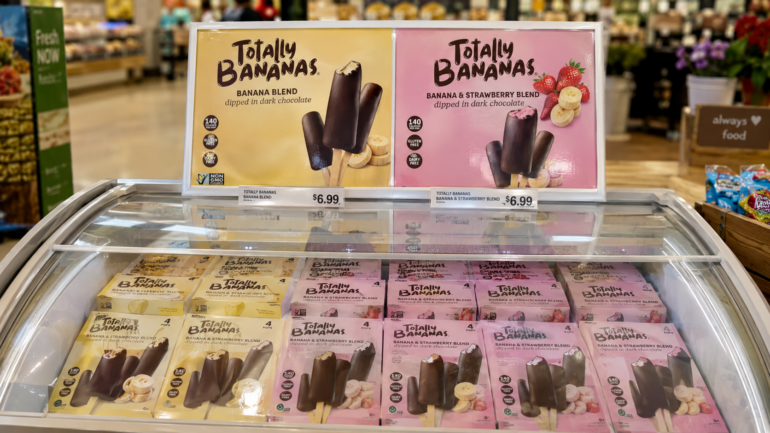
Totally Bananas provides current foodservice ingredients, facility information, and case specifications on its Ingredients & Specs page. A buyer with additional requirements should ask the sales team for the current supporting documents.
Evaluate Samples and Launch Readiness
- Confirm the sample is the exact SKU, flavor, wrapper, and portion in the proposal.
- Photograph the package and case labels, then record lot or date codes for the test.
- Store the sample in the same type of freezer and for enough time to reveal normal handling issues.
- Review appearance, aroma, taste, texture, coating, portion consistency, stick stability, and wrapper condition.
- Test opening, one-handed service, POS scanning, menu naming, waste handling, and restocking.
- Ask receiving and frontline staff for feedback, not only managers or the tasting team.
- Write pass, fail, and follow-up notes. Send unclear issues to the supplier and record the response.
- If approved, define the starting order, launch date, staff information, inventory count, and first performance review.
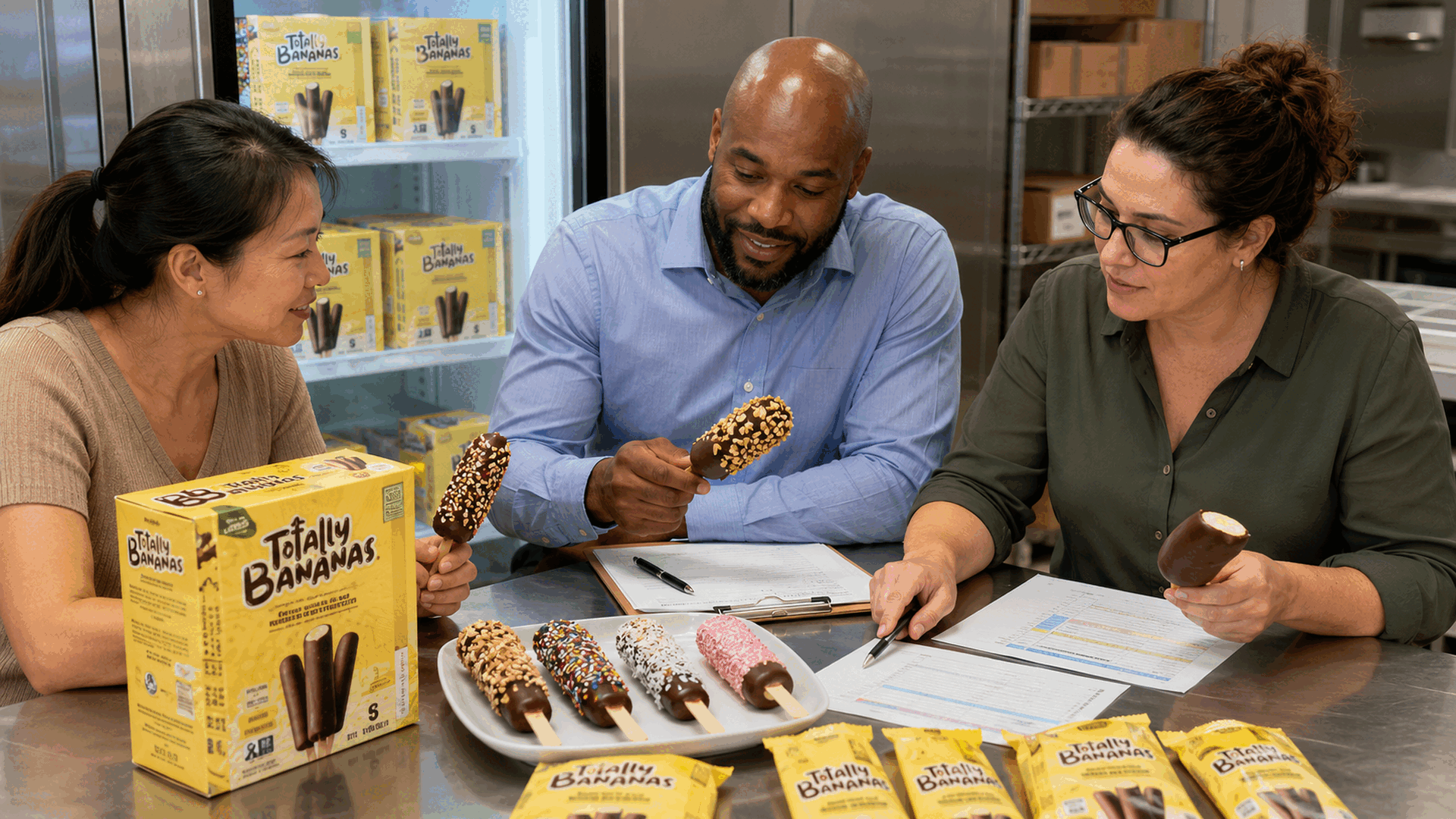
A sample test is more useful when the team uses a short form and the same scoring scale for every supplier. Blind tasting may help compare flavor, but package and service checks must still be completed with the product identified.
Red Flags That Need Follow-Up
- The product name, flavor, case count, or label shown in the quote does not match the sample or specification.
- Important documents are expired, generic, missing the facility or SKU, or difficult to verify.
- A certification or dietary claim is stated in sales copy but not supported for the exact product.
- The supplier will not explain lot codes, complaints, damaged delivery, recall communication, or the responsible contact.
- Lead time, availability, capacity, or delivery promises change often and are not documented.
- The price is clear, but freight, minimums, payment terms, fees, credit, or replacement terms are not.
- Questions receive fast but inconsistent answers from different contacts.
- The supplier pressures the buyer to skip sample, label, or document review to meet a launch date.
A red flag is a reason to investigate, not always a reason to reject. Ask for the missing fact, set a response deadline, and record the resolution. Repeated gaps or unclear ownership are more serious than one correctable mistake.
Frequently Asked Questions
What should I look for in a frozen banana supplier?
Look for an exact product and package fit, clear current documents, suitable case and storage requirements, realistic commercial terms, reliable delivery communication, lot-code identification, issue response, and support after launch.
Should price have the highest scorecard weight?
Not automatically. Price matters, but a foodservice program can fail through poor package fit, incomplete documents, unreliable delivery, or weak issue response. Set weights from your venue risks and goals before comparing suppliers.
Which certifications should a supplier have?
There is no single answer for every buyer. Determine which certifications, audits, or documents your organization and channel require, then verify the scope, facility, SKU relevance, issuer, and current dates.
How can a buyer check supplier reliability?
Review written order and delivery processes, references when available, communication during the evaluation, issue-response examples, backup contacts, and public compliance resources relevant to the business. A trial order can also reveal operational gaps.
How often should supplier documents be reviewed?
Review them before approval and again on the schedule set by your organization. Also trigger a review when the product, label, facility, certification, regulation, supplier status, or an important operating requirement changes.
Start a Supplier Conversation with Totally Bananas
Totally Bananas offers individually wrapped foodservice banana novelties for merchants, concessionaires, distributors, brokers, and attractions. Review the current foodservice product information and then contact the team with your venue type, location, product questions, document needs, expected volume, and launch timing.
Share your venue, market, product requirements, and document checklist with Totally Bananas to confirm current fit and next steps.