Answer Snapshot:
Foodservice banana novelties can be a strong fit for venues that need a distinctive, individually wrapped frozen treat with simple service. Buyers should compare product format, case pack, freezer needs, ingredients, dietary statements, shelf life, merchandising support, and supplier service before adding any item to the menu.
Key Takeaways
- Start with the venue, service model, and available freezer space before comparing flavors.
- An individually wrapped format can support fast, low-touch service, but the package still needs to be easy to identify, scan, open, and merchandise.
- Compare case count, case dimensions, shelf life, storage instructions, ingredient lists, allergen statements, and current dietary claims for the exact SKU.
- Use samples to test taste, coating stability, package condition, portion fit, and service speed under real operating conditions.
- Choose the supplier that provides clear documents and reliable communication, not only the most attractive product photo.
- A frozen dessert can look simple to the guest, but the buying decision behind it is not. Operators must think about freezer space, speed of service, package strength, menu balance, guest needs, waste, reorder timing, and the documents required by their organization.
- This guide explains how to compare foodservice banana novelties without turning the process into a long product search. It focuses on the questions that help an operator decide whether the category fits the venue and which supplier deserves a closer look.
A frozen dessert can look simple to the guest, but the buying decision behind it is not. Operators must think about freezer space, speed of service, package strength, menu balance, guest needs, waste, reorder timing, and the documents required by their organization.
This guide explains how to compare foodservice banana novelties without turning the process into a long product search. It focuses on the questions that help an operator decide whether the category fits the venue and which supplier deserves a closer look.
Who Foodservice Banana Novelties Fit – and What Buyers Should Compare
Foodservice banana novelties are most useful when a venue wants a frozen treat that feels different from a standard ice cream bar or fruit ice pop. The category can work in concessions, convenience stores, attractions, hotels, arenas, gift shops, and other locations where guests want a quick single-serve purchase.
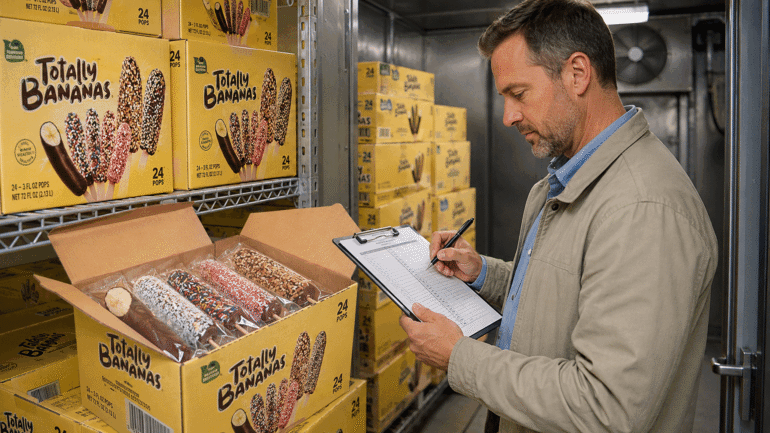
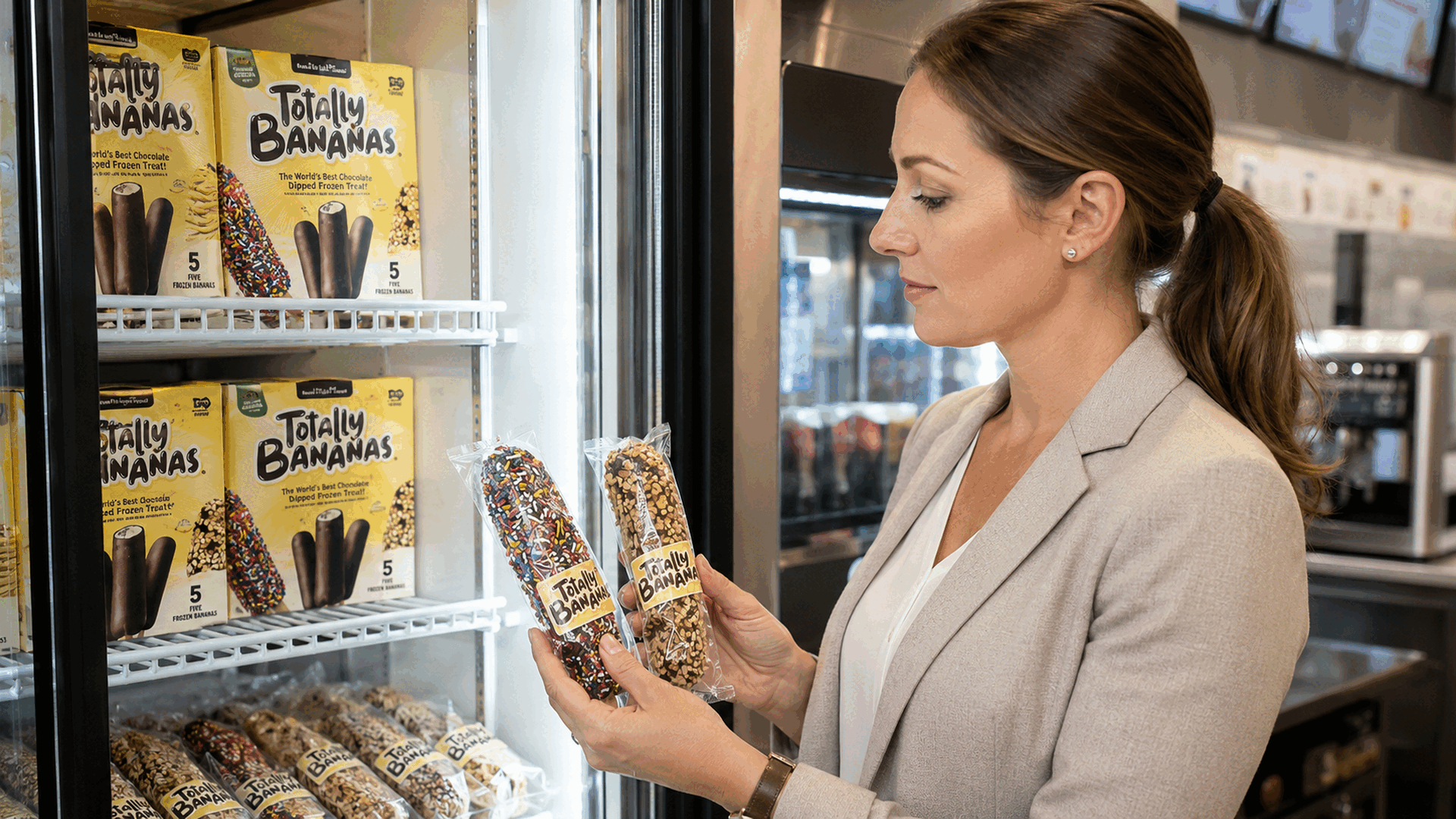
The product still has to fit the operation. A buyer should compare the serving format, package, case configuration, freezer footprint, ingredient and allergen information, shelf-life guidance, and the supplier support available after the first order. Totally Bananas describes its foodservice products as individually wrapped for grab-and-go sale and lists current product and case details on its Foodservice Ingredients & Specs page. Buyers should verify those details again when requesting a quote because products and packaging can change.
Where Banana Novelties Can Fit on a Foodservice Menu
A banana novelty does not need to replace every frozen dessert. It can fill a specific menu role. It may add a fruit-based choice next to ice cream, give guests a chocolate-coated option with a different texture, or create a portable item for people moving through a venue. The best role depends on the audience and the rest of the freezer assortment.
- Distinctive treat: Use the item when the menu needs something guests do not see in every freezer.
- Grab-and-go dessert: An individually wrapped product can be sold without scooping, plating, or extra preparation.
- Assortment balance: Place it beside familiar products so guests can choose between classic and fruit-based formats.
- Seasonal feature: Use signs or menu boards to make the item easy to notice during warm-weather peaks.
- Premium upsell: Test whether the product, portion, packaging, and guest experience support the planned price point.
Avoid assuming that a category will sell in the same way everywhere. A zoo kiosk, hotel market, school concession, and urban convenience store may have very different traffic, price expectations, and freezer access.
Buyer Comparison Table: What to Review
| Buying factor | What to confirm | Why it matters | Proof to request |
| Format and portion | Single serve or multipack; individual weight; stick and wrapper design | Affects service speed, price point, and guest convenience | Current product sheet and sample |
| Case pack | Units per case, flavors per case, outer dimensions, case weight | Affects freezer planning, receiving, and order size | Case specification sheet |
| Cold storage | Required temperature, shelf life, handling after delivery | Protects product quality and supports rotation | Storage statement and date-code guidance |
| Ingredients and claims | Ingredient list, allergens, facility statement, certifications, dietary claims | Helps staff answer questions and prevents broad claims across different SKUs | Current package and supporting documents |
| Packaging | UPC, wrapper strength, label readability, case markings | Supports checkout, receiving, traceability, and display | Physical sample and package images |
| Supplier support | Lead-time process, order contact, issue response, sales aids | Makes launch and repeat ordering easier | Written ordering process and support list |
Do not treat a website headline as the final product record. The current package, specification sheet, nutrition panel, allergen statement, and certification documents should control the decision for each SKU.
Questions to Ask a Foodservice Supplier
A short supplier conversation should remove uncertainty. Ask the same core questions of every supplier so the answers are easy to compare.
- Which products and flavors are currently available for my market and channel?
- How many sellable units are in each case, and are cases single-flavor or mixed?
- What are the current case dimensions, case weight, storage temperature, shelf life, and date-code format?
- Which ingredient, allergen, nutrition, kosher, or other claim documents can you provide for the exact SKU?
- How are damaged, thawed, short, or incorrect deliveries reported and resolved?
- What are the normal order steps, minimums, lead times, delivery options, and reorder contacts?
- Are samples, package images, product sheets, menu photos, signs, or freezer merchandising aids available?
Price matters, but it should be reviewed together with the sellable unit count, expected waste, storage cost, delivery terms, and the level of support. A lower case price does not always mean a better operating result.
Match the Product to the Venue
Concessions and arenas
Speed, package visibility, and one-handed service may be more important than a large flavor range. Test how quickly staff can identify, scan, hand over, and restock the product during a rush.
Convenience stores and micro markets
The wrapper must communicate the product clearly inside a crowded freezer. Confirm that the UPC scans correctly and that the item is easy to count during inventory.
Attractions and family venues
Guest appeal, simple service, dietary questions, and warm-weather demand may all shape the decision. Staff should have quick access to the current ingredient and allergen information.
Hotels, gift shops, and small markets
A small freezer may limit the number of cases and flavors that can be held. Start with a focused assortment and reorder based on actual sell-through instead of adding too many choices at once.
How to Create a Shortlist and Request Samples
- Write down the venue type, guest profile, service hours, expected price range, freezer location, and current frozen-dessert mix.
- Remove any product that does not meet essential packaging, ingredient, allergen, storage, or case-pack needs.
- Compare the remaining suppliers with one scorecard and note every answer that still needs proof.
- Request samples of the exact SKUs being considered, not a similar product or flavor.
- Test the sample after normal freezer storage. Review taste, texture, appearance, wrapper condition, scanning, handling, and staff feedback.
- Choose a small starting order when practical, set a review date, and track units sold, stockouts, damage, guest questions, and reorder timing.
Frequently Asked Questions
What is a foodservice banana novelty?
It is a frozen banana-based treat prepared for commercial sale through venues such as concessions, attractions, convenience stores, hotels, and distributors. Formats vary, so buyers should review the exact product and package rather than rely on the category name alone.
Are banana novelties always individually wrapped?
No. Foodservice products may be individually wrapped, while retail products may use multipacks or other formats. Confirm the unit and case configuration for the SKU you plan to buy.
What documents should a buyer request?
Request the current specification sheet, ingredient list, Nutrition Facts panel, allergen and facility statement, case specifications, storage and shelf-life guidance, and proof for any certification or dietary claim important to the venue.
How many flavors should a venue launch?
There is no fixed number. A smaller venue can start with one or two clear choices, then add or change flavors after reviewing sell-through, guest feedback, freezer space, and reorder performance.
How should operators compare shelf life?
Ask for the stated frozen shelf life, storage temperature, date-code format, and rotation instructions. Also consider how long a case is likely to remain in your own freezer based on expected weekly sales.
Explore Foodservice Options with Totally Bananas
Totally Bananas offers individually wrapped, chocolate-dipped banana novelties for foodservice venues. Operators can review the current foodservice range and product specifications, then contact the team to confirm availability, ordering details, samples, and support for their market.
Review the foodservice range, then request current product information, pricing, availability, and samples for your venue.